Varnish Software leans into sovereign CDN, managed services and cloud-native delivery
Varnish Software's sovereign European CDN, Ora Streaming and Kubernetes Gateway work point to a broader shift from licensed software and premium support toward managed services and SaaS.
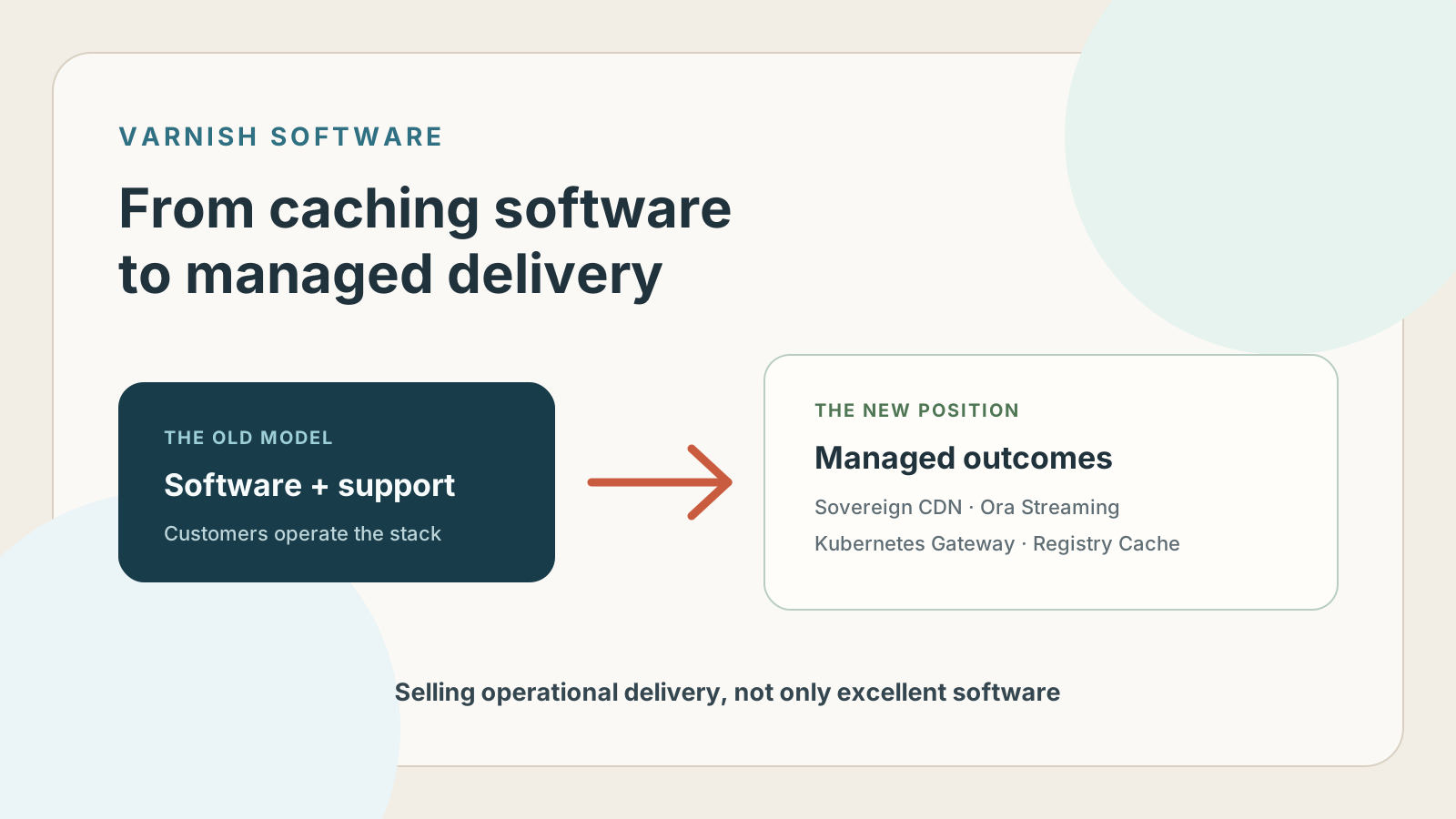
For years, Varnish Software was easy to understand commercially. The company built its reputation on Varnish Cache, then turned that technical credibility into a business model centered on a commercial enterprise fork, subscriptions and premium support.
That playbook was effective for a long time, much like the model used by companies such as Elastic and Grafana: keep the open-source brand strong, make the paid version an easy decision for companies with serious scale or operational requirements, and monetize support, features and production packaging.
The strategic shift: Varnish is moving from selling software ownership toward selling operational delivery.
The software-and-support model reached its ceiling
Selling support and enterprise packaging around a powerful infrastructure product can work extremely well, but it no longer fully matches where the market has moved. Infrastructure buyers increasingly want managed outcomes, not licensed software plus a support contract.
That is why Varnish Software's recent launches matter. The interesting story is not simply that the company introduced a sovereign European CDN, a managed streaming platform and a Kubernetes-native gateway. Together, they show Varnish moving closer to the service outcome its customers actually buy.
Ora turns private CDN expertise into a service
Ora Streaming, launched on April 3, 2025, is a fully managed private CDN-as-a-service for live and on-demand video. Developed with Intel, Ora targets broadcasters, OTT platforms and ad-supported streaming services that need dedicated delivery performance without building and operating a CDN themselves.
This is a meaningful departure from the older Varnish model. Instead of asking customers to buy software and organize operations around it, Ora packages infrastructure, expertise and delivery economics into a managed service.
Sovereignty becomes a product
Varnish CDN, launched on January 27, 2026, makes the shift even more visible. Varnish positions it as a fully Europe-hosted sovereign CDN that keeps traffic, logs and metadata within European jurisdiction.
That directly addresses concerns around GDPR, NIS2 and exposure to non-European legal regimes. The European Commission describes NIS2 as a common framework for cybersecurity risk management across critical sectors, helping turn infrastructure jurisdiction and traffic control into strategic buying criteria.
The important difference is operational: customers are not being asked to assemble a sovereign delivery architecture themselves. Varnish is selling sovereignty as a managed outcome.
Varnish was historically the software layer inside someone else's delivery stack. It now wants to become the delivery platform itself.
Kubernetes addresses a long-running adoption gap
Another part of the strategy is technical. Varnish has spent years trying to remain relevant as infrastructure becomes more cloud-native, and that has not always been easy.
In its May 19, 2026 engineering post introducing Varnish Gateway, the company acknowledged that Varnish had “not been a great fit for Kubernetes.” That unusually direct language reflects a real adoption problem: Varnish remained respected, but it was difficult to fit naturally into platforms built around declarative, Kubernetes-native controls.
On March 24, 2026, Varnish released an open-source implementation of the Kubernetes Gateway API, the Kubernetes standard for traffic routing and infrastructure policy. Platform teams increasingly prefer standardized controls over specialized integrations that demand product-specific operational knowledge.
Gateway API gives Varnish a route into the control plane those teams already use. It is an attempt to preserve the product's delivery strengths while removing one of the biggest sources of friction around modern deployment.
Registry Cache makes developer experience part of the strategy
Varnish Registry Cache extends the same performance thinking into the software-delivery path. Container images, packages and other build artifacts are repeatedly pulled across developer machines, CI runners and Kubernetes clusters. Caching those artifacts closer to where builds and deployments run can shorten feedback loops, reduce upstream bottlenecks and make delivery less dependent on the availability and latency of remote registries.
That makes Registry Cache more than another infrastructure-acceleration product. Its success is visible directly to developers: faster dependency retrieval, faster CI jobs and fewer interruptions between writing code and running it. Varnish is applying its core caching expertise to the part of the platform that developers experience every day.
Registry Cache and Gateway API reinforce each other. Gateway API gives platform teams a Kubernetes-native way to control application traffic, while Registry Cache improves the path through which applications and dependencies reach those clusters. Together, they suggest Varnish is serious about developer experience as well as runtime operations.
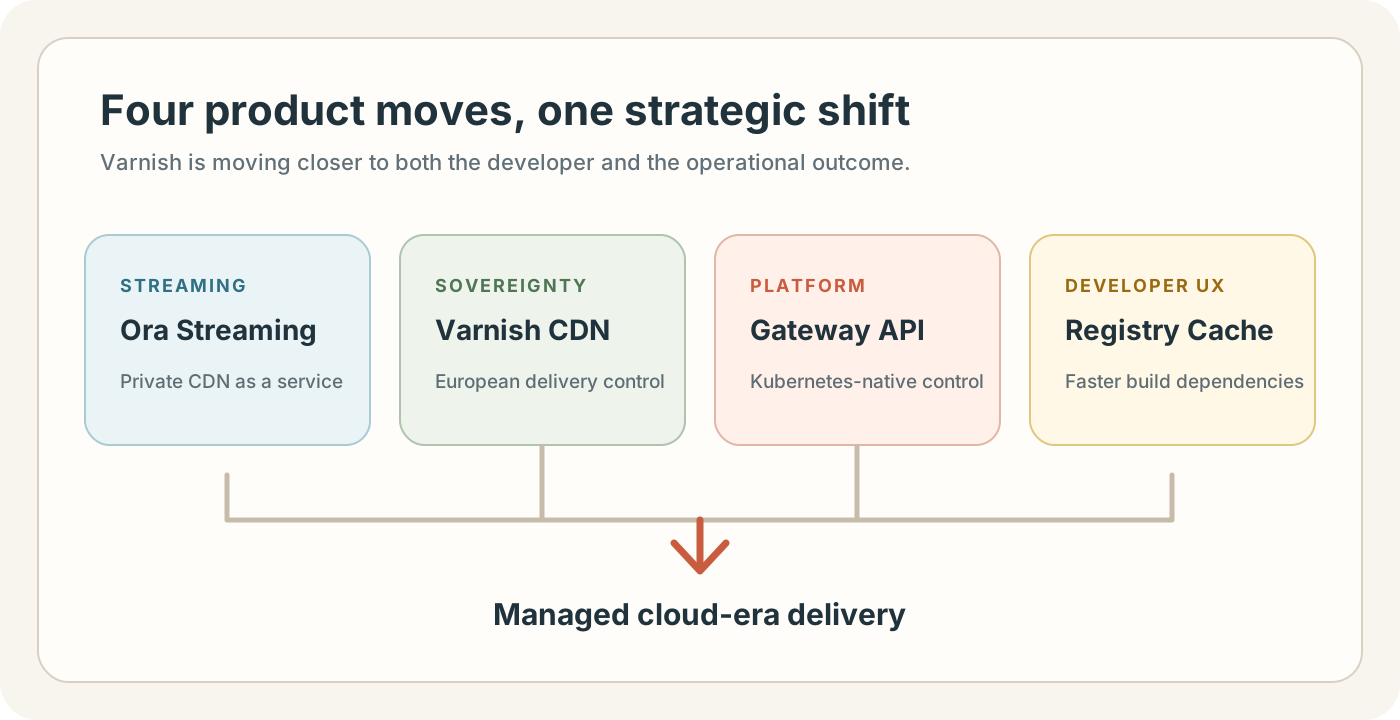
The portfolio is moving toward cloud-era delivery
Varnish also expanded Orca into artifact delivery for distributed Kubernetes and AI workloads. That broadens its message beyond web acceleration and streaming, but the larger theme remains consistent: the company is moving toward platform services, managed delivery and cloud-native operating models.
The commercial posture changes with that move. Features and support entitlements become less important than outcomes such as compliance, performance, operational simplicity and predictable delivery.
Why this is newsworthy
Varnish Software may have stayed in the support-and-enterprise-fork model for too long. It was a profitable and rational strategy, and the enterprise path was an easy bet for many customers. But infrastructure spending increasingly rewards vendors that remove operational burden, not merely vendors that sell excellent software.
Ora Streaming, Varnish CDN, Varnish Gateway and Registry Cache suggest that Varnish recognizes that change. The company is no longer only trying to sell better caching software. It is building a managed, cloud-era version of what Varnish has always done well: controlling and accelerating delivery at scale.
The question now: can Varnish turn its technical credibility into a coherent managed platform before the larger cloud and CDN vendors close the gap?
Sources
- Varnish Software launches fully sovereign CDN to secure Europe's digital supply chain
- Introducing Varnish CDN
- Ora Streaming launches fully managed private CDN and edge delivery service
- Varnish Software releases open-source Kubernetes Gateway API implementation
- Introducing the Varnish Gateway
- Varnish launches Artifact Firewall, expands Orca for Kubernetes and AI workloads
- Beyond the Bottleneck: How Intelligent Caching Accelerates Universal Artifact Delivery for DevOps
- What Is a Virtual Registry Manager?
- Gateway API | Kubernetes documentation
- NIS2 Directive: securing network and information systems